

Product news

Is Heat Transfer Vinyl the Same as Iron On Vinyl?

Is Heat Transfer Vinyl the Same as Iron On Vinyl

When entering the world of garment decoration, custom apparel, DIY clothing, and textile personalization, one question appears repeatedly: Is heat transfer vinyl the same as iron on vinyl?

The short answer is yes—heat transfer vinyl and iron on vinyl are generally the same material, but there are important distinctions in terminology, application methods, finishes, performance, and professional use cases that every creator, business owner, and printing professional should understand.

Whether you produce custom T-shirts, run a printing business, operate a craft store, or create personalized gifts at home, understanding the relationship between heat transfer vinyl and iron on vinyl allows you to choose the correct materials and achieve professional-quality results.

What Is Heat Transfer Vinyl?

Heat Transfer Vinyl is a specially engineered polyurethane (PU) or polyvinyl chloride (PVC)-based material designed to transfer onto fabrics using heat and pressure.

HTV consists of:

  • A colored or printed vinyl layer
  • Heat-activated adhesive backing
  • Transparent carrier sheet

Once heated, the adhesive melts and permanently bonds with textile fibers.

HTV is commonly applied using:

  • Heat press machines
  • Household irons
  • Easy press machines
  • Commercial flat presses

Typical HTV applications include:

  • Custom T-shirts
  • Sports uniforms
  • Tote bags
  • Hoodies
  • Workwear
  • Promotional apparel
  • Caps
  • Fashion garments
  • Textile accessories

The result is a durable, vibrant decoration that becomes integrated with the fabric surface.

What Is Iron On Vinyl?

Iron on vinyl is essentially another name for heat transfer vinyl.

The term “iron on vinyl” became popular because many home crafters apply the material using a household iron instead of industrial equipment.

Manufacturers and hobby communities often use the term iron on vinyl to make the product easier for beginners to understand.

In practical use:

  • Heat Transfer Vinyl = Industry terminology
  • Iron On Vinyl = Consumer-friendly terminology

Both products operate through the same process:

  1. Cut design
  2. Weed excess material
  3. Position design
  4. Apply heat
  5. Peel carrier
  6. Finished decoration

Because the process is identical, users frequently use both names interchangeably.

Heat Transfer Vinyl vs Iron On Vinyl: Are There Any Real Differences?

Although they refer to the same category of material, differences appear in marketing language, equipment expectations, and intended user groups.

Feature Heat Transfer Vinyl Iron On Vinyl
Primary Users Professionals & businesses DIY & hobby users
Application Tool Heat press Household iron
Industry Term Yes Less common
Craft Market Name Sometimes Very common
Performance Same Same
Material Structure Same Same

The actual vinyl material often remains identical.

However, professional HTV products may offer:

  • Higher elasticity
  • Improved wash resistance
  • Faster pressing cycles
  • Lower transfer temperatures
  • Better color consistency

Types of Heat Transfer Vinyl (Iron On Vinyl)

Not all HTV products perform equally. Selecting the correct vinyl directly affects durability and appearance.

Standard PU Heat Transfer Vinyl

Most popular option.

Advantages:

  • Soft hand feel
  • Excellent stretch
  • Easy weeding
  • Professional finish

Best for:

  • T-shirts
  • Fashion garments
  • Everyday apparel

PVC Heat Transfer Vinyl

Traditional and economical.

Advantages:

  • Lower cost
  • Strong color opacity

Limitations:

  • Thicker feel
  • Reduced elasticity

Best for:

  • Promotional garments
  • Large production runs

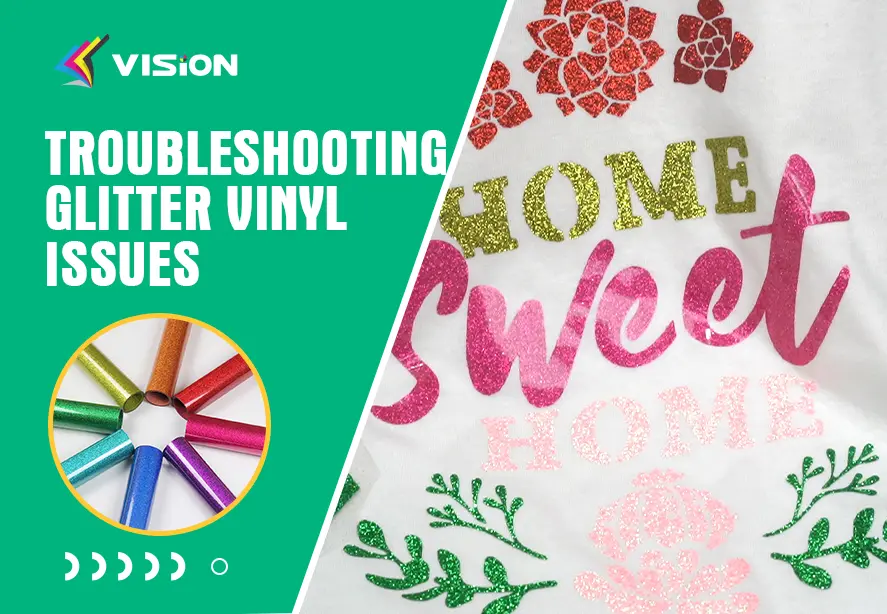
Glitter Heat Transfer Vinyl

Adds reflective sparkle.

Advantages:

  • Eye-catching finish
  • Excellent opacity

Best for:

  • Fashion products
  • Seasonal apparel
  • Kids clothing

Metallic Heat Transfer Vinyl

Creates premium visual effects.

Characteristics:

  • Chrome appearance
  • Luxurious finish

Applications:

  • Event clothing
  • Branding

Reflective Heat Transfer Vinyl

Enhances visibility.

Best for:

  • Safety clothing
  • Athletic wear
  • Outdoor garments

Printable Heat Transfer Vinyl

Allows full-color graphics.

Advantages:

  • Complex artwork support
  • Photo-quality output

Best for:

  • Small batch personalization
  • Detailed branding

Can You Use a Household Iron Instead of a Heat Press?

Yes, but results vary.

Household irons can successfully transfer vinyl for small projects.

However, a heat press provides superior consistency because it delivers:

  • Uniform temperature
  • Even pressure
  • Controlled timing
  • Higher production efficiency

Heat presses generally produce:

  • Better adhesion
  • Improved wash durability
  • Reduced peeling
  • Cleaner finishes

For commercial production, heat pressing remains the preferred solution.

Related:
10 Tips for Cutting Heat Transfer Vinyl Perfectly: Expert Guide
9 Do’s and 9 Don’ts of Layering Heat Transfer Vinyl
Essential Tools for Perfect Heat Transfer Vinyl
How to choose the perfect Heat Transfer Vinyl for T-Shirts?
Best Heat Settings for PU Heat Transfer Vinyl
What fabric is best for heat transfer vinyl?
How to Prevent Peeling and Cracking with Heat Transfer Vinyl?
Best Temperature and Pressure Settings for Heat Transfer Vinyl
Which Iron-On Vinyl is Best for Shirts?
Why does my iron-on vinyl peeling off after washing?