

Blog
70gsm vs 90gsm vs 100gsm Sublimation Paper: Best Choice?

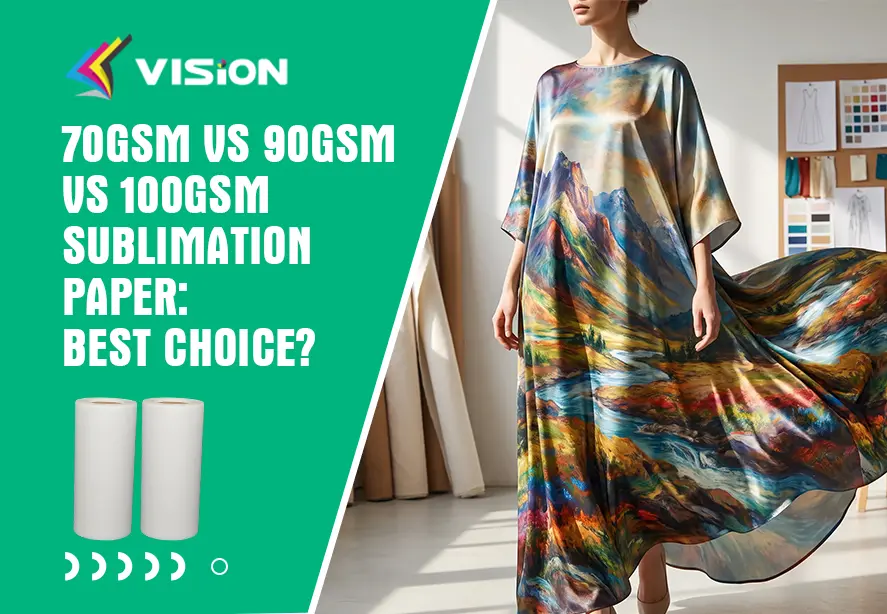
90gsm sublimation paper is the best choice for most sublimation businesses because it provides the ideal balance between ink absorption, drying speed, transfer efficiency, printer compatibility, and cost. However, 70gsm paper is suitable for cost-sensitive high-volume production, while 100gsm sublimation paper generally provides higher mechanical strength and better handling stability than lighter papers. However, overall printing performance depends on the paper coating technology, base paper quality, and manufacturing process rather than GSM alone.
Key Parameters Comparison
| Feature | 70gsm Sublimation Paper | 90gsm Sublimation Paper | 100gsm Sublimation Paper |
|---|---|---|---|
| Paper Weight | Lightweight | Medium weight | Heavy weight |
| Thickness | Thin | Balanced | Thick |
| Ink Absorption | Good | Excellent | Excellent |
| Drying Speed | Very Fast | Fast | Moderate |
| Transfer Efficiency | Good | Very High | Very High |
| Dimensional Stability | Medium | High | Highest |
| Printer Feeding Performance | Good | Excellent | Excellent |
| Curl Resistance | Lower | Better | Best |
| Large Ink Coverage Performance | Average | Excellent | Excellent |
| Cost | Lowest | Medium | Higher |
| Recommended Users | Beginners, high-volume users | Professional sublimation businesses | Industrial users |
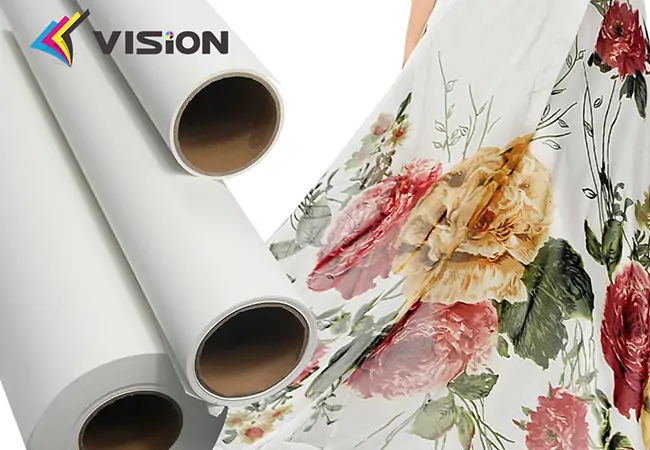
sublimation paper rolls
Understanding Sublimation Paper GSM and Why It Matters
The term GSM (grams per square meter) refers to the weight of the paper. A higher GSM generally means thicker and heavier paper, but paper performance depends on more than weight alone.
High-quality sublimation paper is engineered with several important layers:
- Base paper layer: Provides mechanical strength and feeding stability.
- Coating layer: Controls ink absorption and sublimation dye release.
- Surface treatment: Improves image sharpness, drying speed, and transfer efficiency.
A common misunderstanding is that heavier paper always creates better prints. In reality, sublimation performance depends on the combination of:
- Coating technology
- Ink compatibility
- Printer settings
- Transfer temperature and pressure
- Production environment
A well-designed 90gsm sublimation paper can outperform a lower-quality 100gsm product because the coating quality plays a critical role.
70gsm Sublimation Paper: Lightweight and Cost-Effective Choice
Advantages of 70gsm Sublimation Paper
70gsm sublimation paper is widely used because of its affordability and fast production characteristics.
Its main advantages include:
1. Faster Drying Speed
70gsm sublimation paper usually offers faster drying performance because it is designed with a lighter structure and efficient coating technology. Its lower material thickness also makes it economical for large-volume production. This makes 70gsm paper suitable for businesses that require rapid printing cycles.
2. Lower Material Cost
For companies producing thousands of transfers daily, the lower paper consumption cost can improve overall profitability.
3. Easy Handling
Lightweight rolls and sheets are easier to store, transport, and process, especially for large-volume operations.
Limitations of 70gsm Sublimation Paper
However, lightweight paper has some disadvantages:
- Lower resistance to curling
- Reduced stability during heavy ink printing
- Higher possibility of deformation in humid environments
- Less suitable for extremely detailed images with heavy color coverage
Best Applications for 70gsm Paper
70gsm sublimation paper is recommended for:
- Basic polyester T-shirt printing
- Sportswear production
- Large-volume textile factories
- Cost-sensitive production lines
- Designs with medium ink coverage
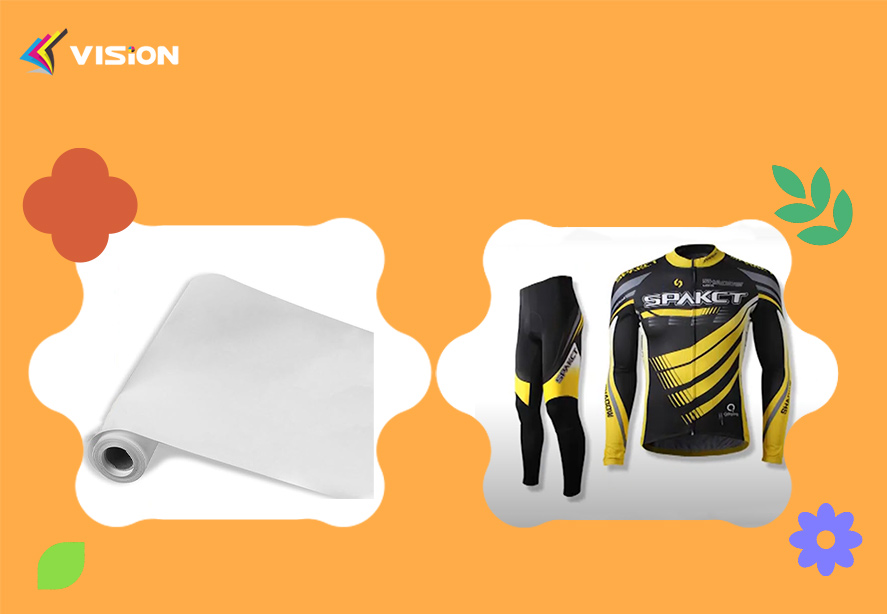
sublimation textiles
90gsm Sublimation Paper: The Professional All-Round Solution
Why 90gsm Is the Most Popular Sublimation Paper Weight
Among all options, 90gsm sublimation paper has become the industry standard because it provides the best balance between quality, efficiency, and price.
It combines the advantages of lightweight and heavyweight papers:
- Faster drying than heavier papers
- Better stability than lightweight papers
- Excellent ink release performance
- Reliable printer feeding
Performance Advantages of 90gsm Sublimation Paper
Excellent Ink Absorption
90gsm paper is designed to absorb sublimation ink evenly while preventing excessive spreading. This helps maintain:
- Sharp text
- Fine graphic details
- Smooth color gradients
- High-definition patterns
High Transfer Efficiency
A good 90gsm sublimation paper releases a high percentage of dye during heat transfer, resulting in:
- Brighter colors
- Higher contrast
- Less wasted ink
Better Machine Compatibility
90gsm paper works well with popular sublimation printers including:
- Epson sublimation printers
- Roland sublimation systems
- Mimaki sublimation printers
- Ricoh sublimation printers
Best Applications for 90gsm Sublimation Paper
90gsm sublimation paper is ideal for:
- Custom T-shirt printing
- Sports apparel
- Sublimation mugs
- Tumblers
- Mouse pads
- Polyester fabrics
- Personalized gifts
- Print-on-demand businesses
For most small businesses and professional customization shops, 90gsm is the recommended choice.
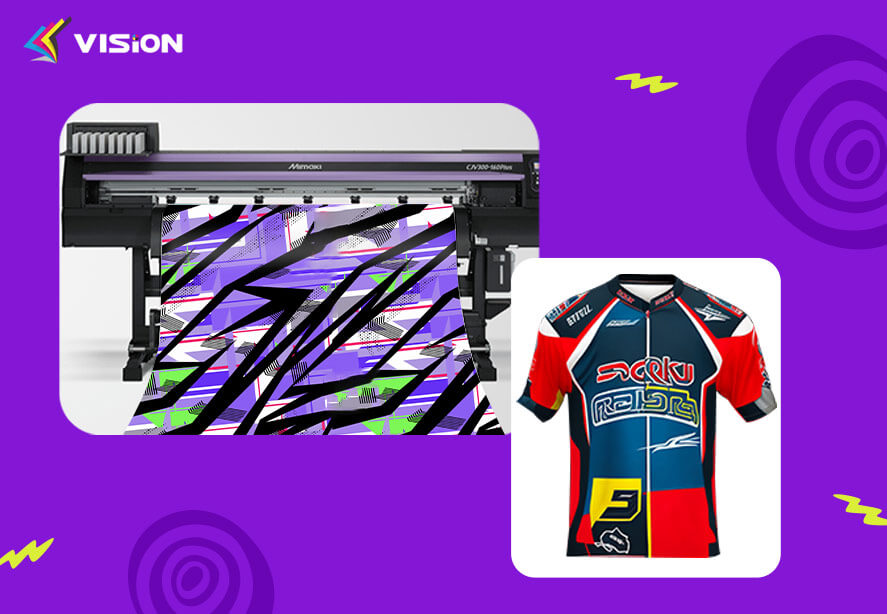
sublimation transfer prints
100gsm Sublimation Paper: Premium Performance for Professional Production
Advantages of 100gsm Sublimation Paper
100gsm sublimation paper provides the highest level of physical stability among these three options.
1. Excellent Dimensional Stability
The thicker structure reduces:
- Paper deformation
- Wrinkles
- Curling problems
- Feeding issues
This makes it suitable for demanding production environments.
2. Better Performance with Heavy Ink Coverage
Large graphics, dark backgrounds, and colorful designs require more ink. A heavier sublimation paper can better manage high ink loads.
3. Improved Handling During Production
For industrial users, thicker paper provides better durability during:
- Roll-to-roll printing
- Automated production
- Long transfer processes
Limitations of 100gsm Sublimation Paper
The disadvantages include:
- Higher material cost
- Slightly slower drying speed
- Increased storage and transportation weight
Best Applications for 100gsm Paper
100gsm sublimation paper is suitable for:
- Industrial textile printing
- Large-format sublimation
- High-quality fashion fabrics
- Complex full-color designs
- Professional production factories
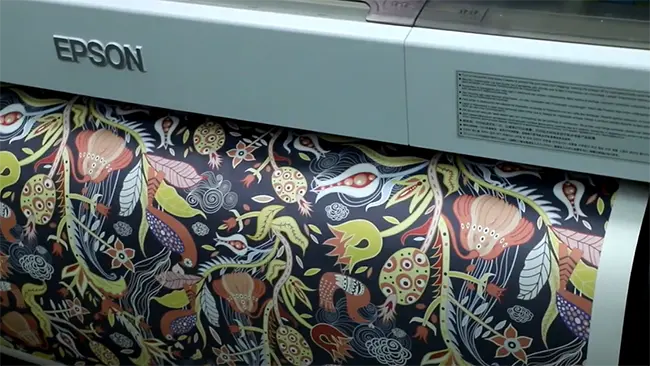
sublimation printing
70gsm, 90gsm, and 100gsm Sublimation Paper Buyer Guide
For bulk buyers, the recommended GSM selection depends on the target market:
| Buyer Type | Recommended GSM | Reason |
|---|---|---|
| Small customization shop | 90gsm | Best balance of quality and cost |
| Large textile factory | 100gsm | Better stability for continuous production |
| Promotional product supplier | 90gsm | Suitable for mugs, tumblers, gifts |
| Cost-focused bulk buyer | 70gsm | Lower material cost |
Choosing a Reliable Sublimation Paper Manufacturer for Bulk Purchasing
For bulk buyers, selecting a sublimation paper manufacturer requires more than comparing paper prices or GSM options. A reliable supplier should have the ability to maintain consistent product quality, stable production capacity, and strict quality control to support long-term business growth.
Key factors to evaluate when choosing a sublimation paper supplier include:
1. Manufacturing Experience and Production Capacity
An experienced sublimation paper factory should have advanced coating and converting equipment to ensure stable output for large-volume orders.
Important capabilities include:
- Consistent paper thickness and weight control
- Uniform sublimation coating application
- Professional slitting and cutting processes
- Stable monthly production capacity
- Reliable batch-to-batch quality consistency
For international buyers, a supplier with strong manufacturing capability can ensure continuous supply and reduce risks caused by production delays or quality fluctuations.
2. Quality Control Throughout Production
High-quality sublimation paper requires strict control from raw materials to finished products.
A professional manufacturer should monitor:
- Base paper quality
- Coating thickness
- Moisture content
- Ink absorption performance
- Drying speed
- Transfer efficiency
- Roll and sheet accuracy
These quality factors directly influence the final printing performance, including color brightness, image sharpness, and transfer success rate.
3. Technical Support and Application Solutions
Different customers have different production requirements. A professional sublimation paper manufacturer should not only supply products but also provide technical recommendations based on:
- Printer models
- Sublimation ink types
- Fabric materials
- Transfer temperature and pressure
- Production speed requirements
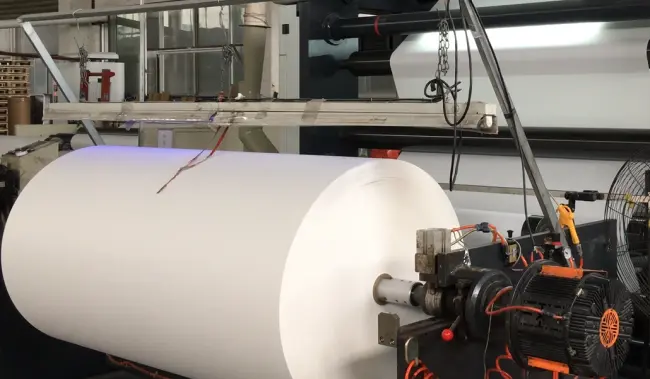
sublimation paper manufacturing
Why Work With an Experienced Sublimation Paper Factory?
A reliable manufacturer should provide:
- Years of sublimation paper production experience
- International export experience
- OEM and private label services
- Customized GSM solutions
- Stable supply capacity
- Professional after-sales support
For distributors and wholesalers, choosing a factory partner ensures consistent quality and long-term supply reliability.
Related:
How Importers Choose the Right Sublimation Paper
Best Sublimation Paper for Beginners
What Is the Best Sublimation Paper Supplier in China?
Best Sublimation Paper Options for Tumblers
The difference between fast dry and sticky sublimation paper
Our 4 Best Sublimation Paper Types – Which One is best for You
Roll Size and Sheet Size of sublimation paper
The Different Types of Sublimation Paper and Their Features