

Blog
How to Import Sublimation Paper from China?

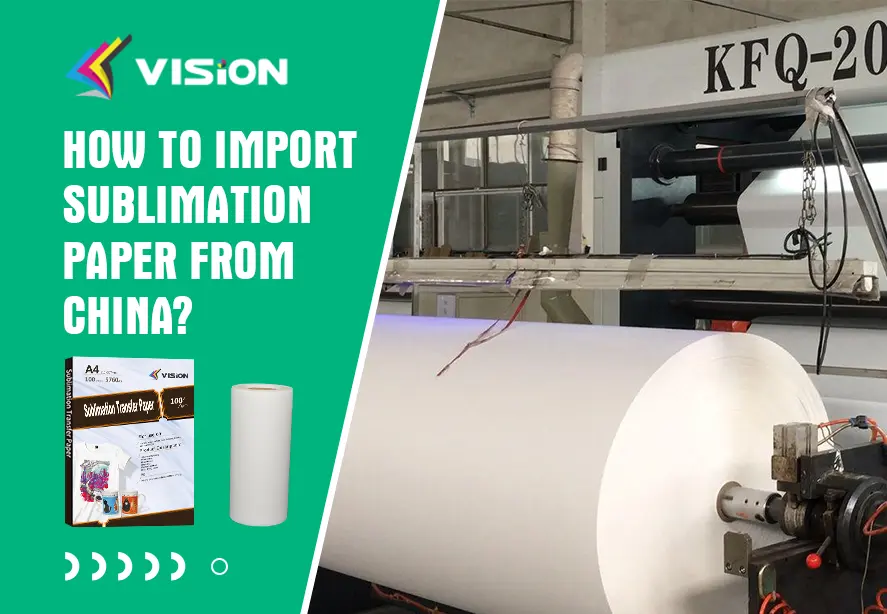
Importing Sublimation Paper from China can be an effective way for distributors, printing companies, wholesalers, and textile businesses to obtain consistent products at competitive prices. China has a mature supply chain for digital transfer materials, including sublimation paper, coating chemicals, packaging, printing equipment, and converting services.
However, successful importing is not simply about finding the lowest quotation. Paper weight, coating performance, ink compatibility, drying speed, release characteristics, packaging, order quantity, quality control, and shipping conditions can all affect the final cost and printing results.
As a professional sublimation paper factory, we recommend evaluating suppliers from both a manufacturing and importing perspective. The following guide explains the main steps involved in sourcing sublimation paper from China and the practical factors international buyers should consider.
1. Understand the Different Types of Sublimation Paper
Before contacting Chinese suppliers, importers should define the type of Sublimation Paper they actually need.
Sublimation paper is generally designed for transferring dye-sublimation inks onto polyester fabrics, coated hard substrates, and other suitable materials. Different applications require different paper characteristics.
Common specifications include:
- Lightweight sublimation paper for standard textile transfer applications
- Medium-weight sublimation paper for general-purpose printing
- High-release sublimation paper for applications requiring efficient ink transfer
- Fast-drying sublimation paper for high-speed digital printing
- Large-format sublimation paper for commercial and industrial printers
- Roll sublimation paper for production environments
- Sheet sublimation paper for smaller-format printers and DIY applications
The correct specification depends on the printer, ink, printing speed, transfer temperature, substrate, and desired image quality.
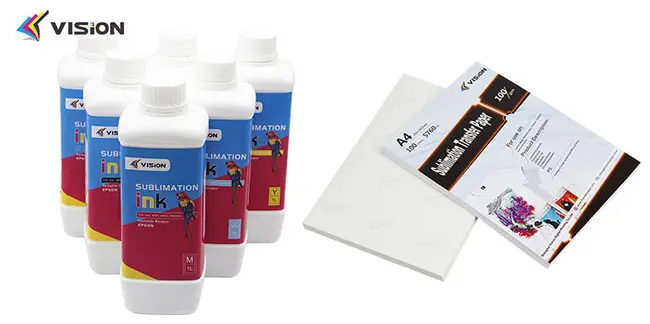
sublimation ink and paper
For example, a paper that performs well with a desktop printer may not be the best choice for a high-speed industrial printer. Therefore, product selection should be based on the actual production environment rather than paper price alone.
2. Find a Reliable Sublimation Paper Factory in China
The first major sourcing decision is whether to purchase from a trading company or directly from a Sublimation Paper factory.
A factory can often provide better control over production specifications, OEM packaging, quality requirements, and long-term supply. A trading company may offer a broader product range, but buyers should confirm whether the supplier has direct manufacturing capabilities.
When evaluating a factory, we recommend checking several areas:
Manufacturing Capability
Ask whether the supplier actually manufactures the coating and converting process or mainly purchases finished products from another manufacturer.
A capable factory should be able to explain its coating technology, paper base, production process, quality-control procedures, and available specifications.
Production Experience
Experience matters because sublimation paper performance depends heavily on coating consistency. A supplier with established production processes is generally better positioned to maintain consistent coating weight, drying performance, paper flatness, and release characteristics.
Quality Control
Ask about inspection procedures for:
- Paper grammage
- Thickness
- Moisture
- Coating uniformity
- Ink absorption
- Drying speed
- Release performance
- Curling and deformation
- Roll or sheet dimensions
- Packaging quality
A supplier should be able to provide product specifications and samples before a large commercial order is placed.
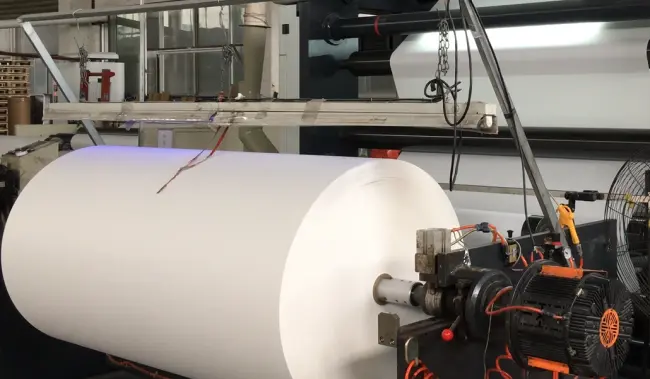
sublimation paper manufacturing
3. Request Sublimation Paper Samples Before Ordering
Samples are one of the most important parts of the sourcing process.
A paper may look similar to another product but perform differently during actual printing and heat transfer. Before placing a bulk order, importers should test the paper with their own printer, sublimation ink, transfer equipment, and target substrates.
A practical sample test can evaluate:
Printing performance: Check whether ink coverage is even and whether fine details remain sharp.
Drying: Observe how quickly the printed image becomes sufficiently dry for handling and transfer.
Ink release: Compare how effectively the ink transfers from the paper to polyester fabric or another suitable substrate.
Color reproduction: Compare transferred colors against the expected output.
Image definition: Examine small text, lines, gradients, and photographic details.
Paper handling: Check whether the paper feeds smoothly through the printer without excessive curling or jamming.
Testing the complete printing-to-transfer process is more useful than evaluating the paper visually.
4. Compare Prices Based on Total Import Cost
The lowest factory quotation is not necessarily the lowest overall cost.
When importing Sublimation Paper from China, the total landed cost may include:
- Product price
- Packaging
- Inland transportation in China
- Export documentation
- International freight
- Customs clearance
- Import duties and taxes
- Local delivery
- Warehousing
- Potential inspection or certification costs
Buyers should therefore compare suppliers based on the final cost per sheet, roll, or square meter rather than simply comparing the quoted factory price.
For example, a slightly more expensive paper may provide better transfer efficiency, fewer printing problems, and more stable production. For commercial users, reducing waste and production downtime can be more valuable than saving a small amount on the initial paper purchase.
5. Discuss MOQ and OEM Requirements
Chinese sublimation paper manufacturers commonly establish minimum order quantities, or MOQs, depending on the product specification and packaging requirements.
Standard products may have a lower MOQ than fully customized products.
If an importer requires:
- Custom brand printing
- Private-label packaging
- Customized carton design
- Special roll dimensions
- Customized sheet sizes
- Special paper weight
- Customized labels
the factory may require a higher order quantity.
For new customers, starting with a standard specification can reduce initial investment and make product testing easier. Once the market has been validated, buyers can consider OEM packaging or customized specifications.
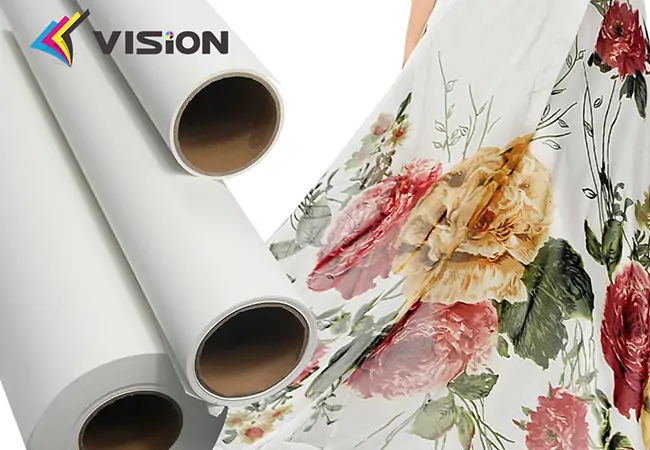
sublimation paper rolls
6. Confirm Packaging and Shipping Requirements
Sublimation paper is sensitive to moisture and improper storage. Packaging therefore deserves particular attention when importing from overseas.
For sheet products, suitable packaging should protect the paper from moisture, deformation, dust, and physical damage.
For roll products, packaging should provide sufficient protection against crushing and environmental humidity during transportation.
Importers should discuss:
- Inner packaging
- Carton dimensions
- Pallet requirements
- Moisture protection
- Roll protection
- Carton labeling
- Shipping marks
- Container loading
- Recommended storage conditions
The packaging should be appropriate for the transportation method and destination climate.
7. Choose the Right Incoterm
International buyers should clearly understand the Incoterm used in the quotation.
Common options include EXW, FOB, CIF, and DDP, although the most suitable term depends on the buyer’s logistics capabilities and importing experience.
For experienced importers, FOB can provide greater control over international freight arrangements. Buyers who prefer a more comprehensive logistics solution may consider other arrangements depending on the supplier and destination.
The important point is to confirm exactly which costs are included in the supplier’s quotation.
A quotation should not be evaluated without understanding the corresponding shipping and delivery responsibilities.
8. Confirm Printer and Ink Compatibility
Not every sublimation paper performs identically with every printer and ink system.
Before purchasing large quantities, buyers should provide the supplier with relevant information such as:
- Printer brand and model
- Ink type
- Printing resolution
- Printing speed
- Fabric type
- Transfer temperature
- Transfer time
- Target application
For example, textile manufacturers using high-speed production printers may have different requirements from small businesses producing customized T-shirts.
Providing this information allows the Sublimation Paper factory to recommend a more suitable specification and reduces the risk of ordering a product that does not meet the buyer’s production requirements.
9. Establish Quality Standards Before Mass Production
For repeat orders, quality standards should be defined before production begins.
Instead of relying only on statements such as “high quality” or “premium quality,” buyers should establish measurable requirements where possible.
These may include:
- Paper weight tolerance
- Sheet or roll dimensions
- Moisture level
- Packaging specifications
- Printing performance
- Transfer performance
- Acceptable defect rate
- Core size for rolls
- Labeling requirements
For long-term cooperation, retaining an approved sample can also be useful. Future production can then be compared against the approved reference.
This approach helps reduce disagreements between the importer and manufacturer.
10. Consider Production Capacity and Lead Time
Price is only one part of supplier selection. Production capacity is equally important for wholesalers and distributors.
Before placing an order, buyers should ask about:
- Normal production lead time
- Monthly production capacity
- Peak-season capacity
- Raw material availability
- Packaging lead time
- Export experience
- Order scheduling
A supplier that can provide consistent delivery is particularly important for distributors who need to maintain inventory for their customers.
A reliable Sublimation Paper factory should communicate realistic production schedules rather than simply promising the fastest possible delivery.
11. Inspect the Goods Before Shipment
For larger orders, pre-shipment inspection can provide additional protection.
Inspection may include checking product quantity, dimensions, packaging, labels, carton condition, and selected printing or transfer performance.
For high-volume importers, third-party inspection can also be considered.
However, inspection should be based on clearly defined specifications. Without an agreed quality standard, it can be difficult to determine whether a shipment actually meets the buyer’s requirements.
12. Build a Long-Term Relationship with the Manufacturer
For businesses importing sublimation paper regularly, supplier relationships can become an important competitive advantage.
Long-term cooperation may make it easier to maintain consistent specifications, negotiate production schedules, develop OEM packaging, and improve communication.
A good manufacturer should also be able to provide technical support when the buyer encounters issues related to paper feeding, drying, ink loading, transfer conditions, or packaging.
The objective should not simply be to find the cheapest supplier for one order. The better approach is to establish a stable supply chain capable of supporting future business growth.
13. Why Work Directly with a Sublimation Paper Factory?
For professional distributors and importers, working directly with a manufacturer can provide several practical advantages.
A direct factory relationship can make it easier to communicate technical requirements, develop customized products, arrange OEM packaging, and maintain consistent product specifications.
Manufacturing experience is particularly relevant for sublimation paper because coating consistency can have a direct impact on printing and transfer performance.
For buyers looking for a long-term supplier, evaluating the manufacturer’s actual production capabilities is therefore more meaningful than comparing catalog prices alone.
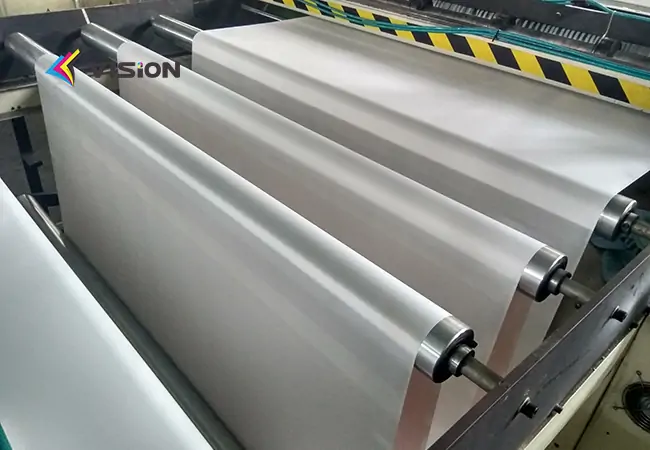
sublimation works
Choosing the Right Sublimation Paper Supplier in China
Importing Sublimation Paper from China can offer wholesalers, distributors, printing businesses, and textile manufacturers access to a mature manufacturing supply chain and a wide range of product specifications. However, successful sourcing depends on more than obtaining a competitive quotation.
The most important factors are product compatibility, coating performance, quality consistency, factory capability, packaging, MOQ, production capacity, logistics, and long-term supply stability.
As an experienced Sublimation Paper factory, we recommend that importers test samples under their actual printing and transfer conditions before committing to large-volume purchases. This provides a more reliable basis for evaluating product performance and helps avoid unnecessary costs caused by incompatible materials.
For businesses looking for a stable supplier, the best approach is to evaluate the complete supply chain—from raw materials and coating technology to quality control, packaging, production capacity, and export experience.
Related:
70gsm vs 90gsm vs 100gsm Sublimation Paper: Best Choice?
How Importers Choose the Right Sublimation Paper
Best Sublimation Paper for Beginners
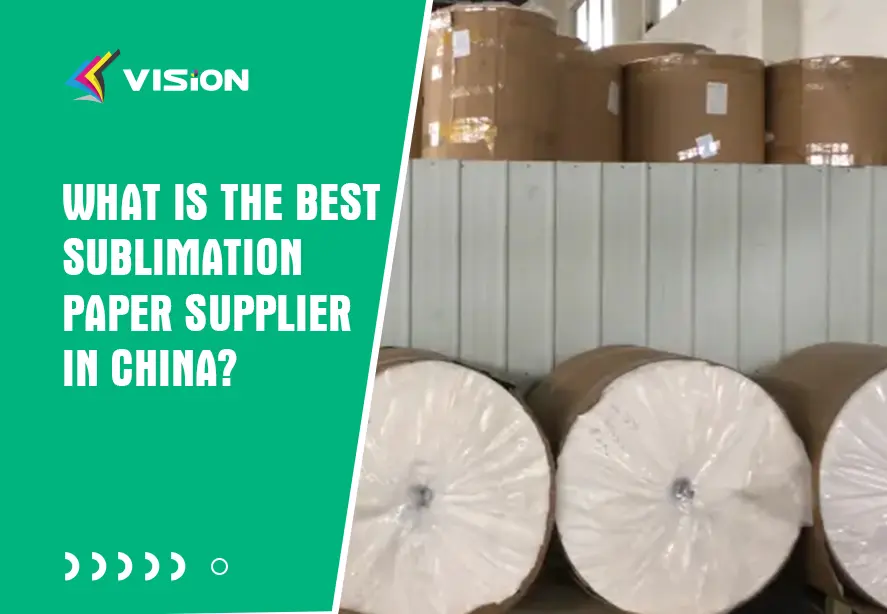
What Is the Best Sublimation Paper Supplier in China?
Do I Need a Special Printer for Sublimation Paper?
What happens if you use regular ink on sublimation paper?
The Different Types of Sublimation Paper and Their Features