

Blog
How to Compare Transfer Printing Material Samples Before Order

Ordering samples is an important step when selecting a transfer printing material supplier. For importers, wholesalers, and printing businesses, a sample that looks good does not necessarily guarantee consistent performance during bulk production.
The most reliable approach is to compare materials under the same working conditions, record the results, and evaluate whether the supplier can maintain similar quality across different batches.
This guide explains how to test transfer printing material samples before making a large purchasing commitment.
How to Compare Transfer Printing Material Samples Before a Bulk Order
1. Define Your Testing Requirements
Before requesting samples, identify the products and applications you need to evaluate.
Different transfer materials require different testing methods:
-
Heat Transfer Paper: Check print quality, fabric compatibility, transfer performance, and wash durability.
-
Sublimation Paper: Evaluate drying performance, color reproduction, ink release, and transfer consistency.
-
Heat Transfer Vinyl: Test cutting, weeding, adhesion, flexibility, and washing resistance.
-
DTF Printing Materials: Examine film coating consistency, ink compatibility, powder adhesion, and release performance.
Use the same printer, ink, substrate, and relevant processing conditions when comparing equivalent samples.
2. Compare Printing and Transfer Performance
Print Quality and Color Consistency
Print identical designs on each sample using controlled settings. Compare color accuracy, fine details, image sharpness, and visible defects.
For sublimation paper, also observe drying behavior and color transfer results. For DTF film, check whether the printed image remains consistent across different areas of the film.
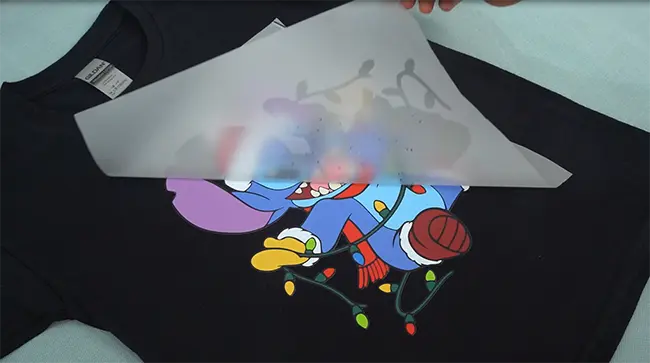
peel dtf film
Avoid judging quality from a single successful print. Repeated tests provide a more useful indication of material performance.
Transfer Efficiency and Adhesion
Follow each manufacturer’s recommended transfer settings and record the results.
Evaluate whether the material transfers cleanly, adheres properly, and maintains the expected appearance after cooling.
For HTV, pay attention to edge lifting, surface texture, and flexibility. For transfer paper, examine image integrity and adhesion to the intended fabric.

Soft Metallic htv Vinyl-peel
3. Test Durability Under Real Conditions
A transfer may appear acceptable immediately after application but perform differently after washing, stretching, or repeated handling.
For textile applications, consider:
-
Washing resistance under a defined wash cycle
-
Cracking, peeling, or fading
-
Stretch recovery and flexibility
-
Changes in surface texture
-
Adhesion after repeated use
Use the same washing conditions and evaluation criteria for all comparable samples.
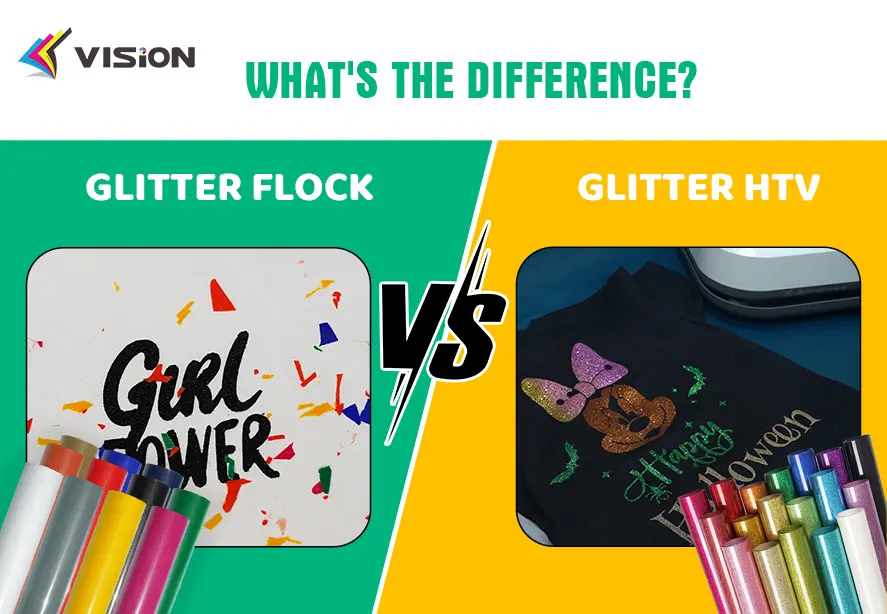
Different materials have different performance characteristics. A specialty glitter HTV, for example, should not be evaluated using exactly the same expectations as a thin PU vinyl.

Glitter HTV
4. Check Material Consistency and Specifications
For wholesale buyers, consistency is often as important as initial performance.
Compare measurable specifications such as thickness, weight, width, roll length, coating uniformity, and packaging condition.
Ask suppliers whether the sample represents their standard production material.
If possible, request samples from different production batches. This can help identify variations that may not appear during a single test.
5. Evaluate Samples Using a Comparison Checklist
A structured comparison makes purchasing decisions easier and reduces reliance on subjective impressions.
| Evaluation Item | What to Check |
|---|---|
| Print quality | Color, sharpness, visible defects |
| Transfer performance | Release, adhesion, consistency |
| Durability | Washing, stretching, peeling |
| Material specifications | Thickness, size, coating |
| Production compatibility | Printer, ink, equipment |
| Batch consistency | Repeatability across samples |
| Supplier support | Documentation, response, lead time |
For each criterion, record observations and identify any failures that would prevent the material from meeting your customers’ requirements.
6. Consider the Total Cost of Using the Material
The lowest sample quotation does not always represent the best purchasing value.
A material that requires repeated printing, additional processing, or frequent replacement may increase operating costs.
When comparing suppliers, consider material consumption, waste rates, processing efficiency, packaging, and shipping expenses.
For distributors, customer complaints and product returns can also affect long-term profitability.
The objective is not simply to find the cheapest product, but to identify a material that delivers suitable performance at a sustainable cost.
7. Confirm Bulk Order Conditions Before Purchasing
Once a sample passes your tests, confirm the commercial details with the supplier.
Important questions include:
-
Will the bulk order match the approved sample specifications?
-
What quality control procedures are used?
-
Can the supplier provide consistent packaging and labeling?
-
Are OEM or private-label services available?
-
What are the MOQ and expected production lead times?
-
How are quality complaints or defective batches handled?
Keep an approved reference sample and written specifications for future quality comparisons.
For larger orders, buyers may also consider pre-shipment inspections or agreed acceptance criteria.
Request Transfer Printing Material Samples
VISION supplies a range of transfer printing materials, including heat transfer paper, sublimation paper, heat transfer vinyl, and DTF printing supplies.
We work with importers, wholesalers, distributors, and printing businesses seeking reliable material supply and long-term cooperation.
Explore our transfer printing product range or contact VISION to discuss product specifications, sample testing, wholesale quotations, and OEM/ODM requirements.
Email: info@visionsub.com
WhatsApp: +86 18001836806
Related:
Sublimation Paper vs Inkjet Heat Transfer Paper
Best Sublimation Paper for Beginners
Heat Transfer Vinyl vs Inkjet Transfer Paper: Which Is Best for You
Choosing the Right Transfer Paper for Different T-Shirt Fabrics
Differences Between Sublimation Printing and Heat Transfer Printing