

Blog
Best Sublimation Paper for Beginners

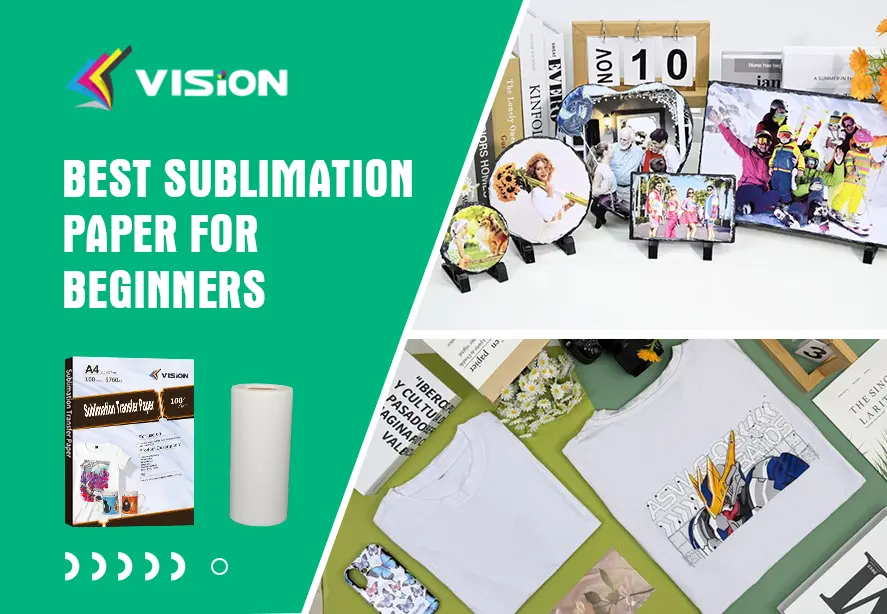
If you are just starting with sublimation printing, the best sublimation paper for beginners is a paper with a transfer rate of 95% or higher, a weight between 100–120gsm, fast ink drying performance, excellent color release, and compatibility with Epson EcoTank or other sublimation printers. Choosing the right paper is just as important as selecting quality sublimation ink and a reliable heat press. High-quality sublimation paper minimizes ghosting, reduces ink bleeding, delivers vibrant colors, and helps beginners achieve professional-quality transfers from the very first project.
Whether you plan to personalize T-shirts, mugs, mouse pads, puzzles, aluminum panels, or polyester fabrics, understanding how sublimation paper works will save time, materials, and money. This guide explains the key specifications, compares paper options, recommends applications, and provides expert buying advice based on real production requirements.
Features of Sublimation Transfer Paper
Unlike ordinary inkjet paper, sublimation paper features:
- High ink retention
- Fast drying coating
- Controlled ink release
- Excellent dimensional stability
- Minimal curling
- High transfer efficiency
The quality of the paper directly influences image sharpness, color saturation, and transfer consistency.
Key Parameters of the Best Sublimation Paper
Before buying sublimation paper, beginners should compare the following specifications.
| Parameter | Recommended Specification | Why It Matters |
|---|---|---|
| Paper Weight | 100–120gsm | Balanced ink absorption and release |
| Transfer Rate | ≥95% | Produces brighter images |
| Drying Speed | Fast | Prevents smudging |
| Surface Coating | Premium microporous coating | Uniform ink distribution |
| Curl Resistance | Excellent | Smooth printer feeding |
| Printer Compatibility | Epson EcoTank, converted Epson printers | Reliable printing |
| Ink Compatibility | Dye sublimation ink | Maximum transfer efficiency |
| Available Sizes | A4, A3, Roll | Suitable for hobby and commercial use |
| Humidity Resistance | High | Stable storage performance |
| Heat Resistance | Excellent | Prevents deformation during transfer |
These specifications provide the most stable performance for beginners while minimizing printing errors.
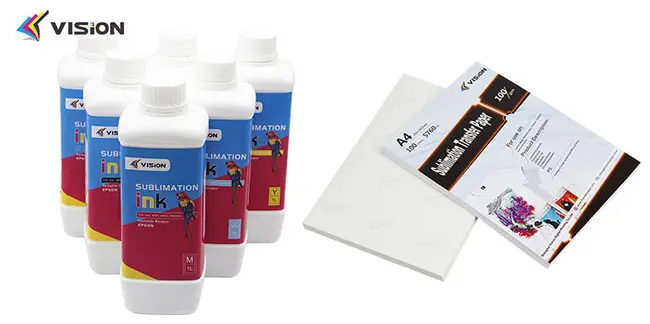
sublimation ink and paper
Understanding Sublimation Paper Weight
One of the first questions beginners ask is whether heavier paper is better.
The answer depends on your application.
70–90gsm
- Faster drying
- Lower cost
- Suitable for low-ink designs
- More prone to curling
100–120gsm (Best Choice for Beginners)
- Excellent color reproduction
- Easy handling
- Stable feeding
- Balanced ink absorption
120–140gsm
- Ideal for heavy ink coverage
- Better for industrial production
- Slightly longer drying time
For most home users and small businesses, 120gsm sublimation paper offers the best balance between quality and usability.
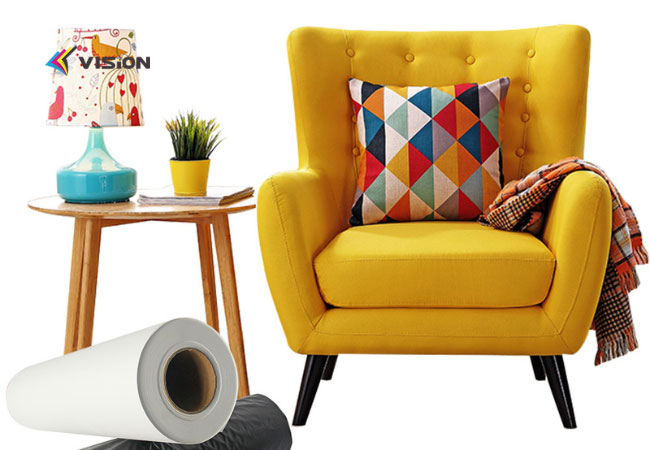
sublimation-paper-roll
Why Transfer Rate Matters
Transfer rate refers to the percentage of sublimation ink released from the paper into the substrate during heat pressing.
Higher transfer rates produce:
- Brighter colors
- Less wasted ink
- Better black density
- More accurate skin tones
- Sharper details
Typical performance comparison:
| Transfer Rate | Performance |
|---|---|
| 75% | Entry-level |
| 80% | Acceptable |
| 90% | Professional |
| 95% | Excellent |
| 98% | Premium industrial grade |
Beginners should prioritize papers with a transfer efficiency above 95%.
Roll Paper vs Sheet Paper
Choosing between sheet paper and roll paper depends on production volume.
Sheet Sublimation Paper
Advantages:
- Easy to use
- Perfect for beginners
- Compatible with desktop printers
- Minimal setup
Applications:
- T-shirts
- Mugs
- Phone cases
- Mouse pads
- DIY gifts
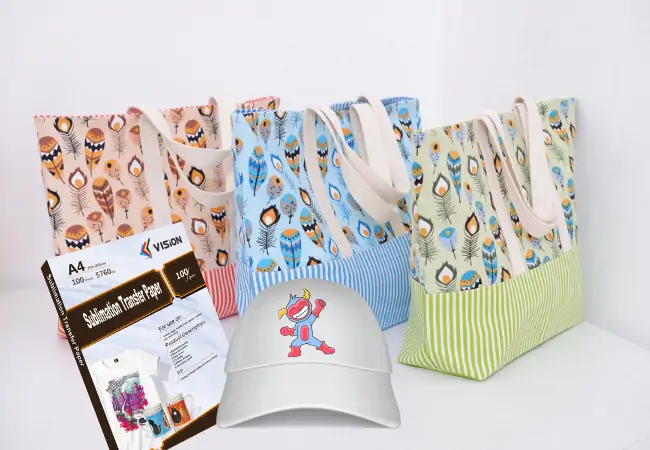
sublimation transfer printing
Sublimation Paper Roll
Advantages:
- Continuous production
- Lower operating costs
- Industrial efficiency
- Reduced downtime
Ideal for:
- Garment factories
- Sportswear manufacturers
- Textile printing companies
- Large-format production
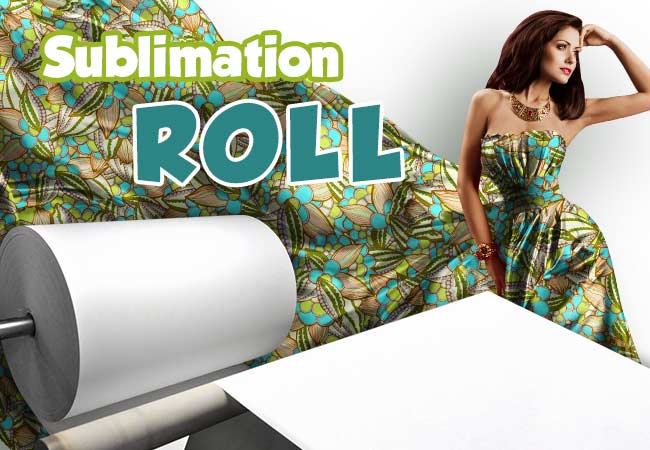
Professional sublimation paper roll manufacturer solutions offer consistent coating quality, smooth winding, and excellent compatibility with industrial printers such as Epson, Mimaki, Roland, and Mutoh.
sublimation paper
Common Applications of Sublimation Paper
Custom T-Shirts
Polyester T-shirts remain the most popular sublimation product.
Recommended settings:
- Temperature: 190–200°C
- Time: 45–60 seconds
- Medium pressure
Results:
- Bright colors
- Wash resistance
- No cracking
- No peeling
Sportswear
High-performance sports apparel requires:
- Stretchable fabrics
- Durable graphics
- Sweat-resistant prints
Premium sublimation paper ensures consistent image quality across large fabric panels.
Ceramic Mugs
Popular for:
- Corporate gifts
- Personalized gifts
- Promotional products
Typical settings:
- 180–200°C
- 180–240 seconds
Metal Photo Panels
Sublimation aluminum panels require precise color transfer.
High-quality paper reduces:
- Color shifts
- Ghosting
- Uneven transfer
Mouse Pads
Rubber mouse pads with polyester surfaces produce vibrant, durable prints when paired with premium sublimation paper.
Phone Cases
Polymer-coated phone cases demand:
- Sharp details
- High-resolution printing
- Accurate color matching
Fast-drying sublimation paper improves edge clarity.
How Beginners Should Choose Sublimation Paper
When comparing products, evaluate these criteria.
1. Ink Compatibility
Always use paper specifically designed for dye sublimation ink.
2. Printer Compatibility
Most beginners use:
- Epson EcoTank
- Epson converted printers
- Sawgrass printers
Confirm compatibility before purchasing.
3. Coating Quality
A premium coating provides:
- Uniform ink absorption
- Smooth printing
- Stable drying
- High transfer efficiency
4. Production Volume
For hobby users:
- A4
- Letter size
- A3 sheets
For businesses:
- Roll paper
- Continuous feeding
5. Humidity Stability
Poor-quality paper absorbs moisture quickly, leading to:
- Paper curling
- Ink migration
- Reduced transfer quality
Choose paper stored in moisture-resistant packaging.
Common Beginner Mistakes
Avoid these frequent problems.
Using Ordinary Inkjet Paper
Regular paper cannot properly release sublimation ink.
Result:
- Dull colors
- Poor transfer
- Ink absorption into paper
Printing on Cotton
Sublimation works best on:
- Polyester
- Polymer-coated blanks
Cotton requires alternative transfer technologies.
Using Low-Quality Paper
Cheap paper often causes:
- Smearing
- Ghosting
- Uneven colors
- Paper jams
Incorrect Heat Settings
Too much heat:
- Yellowing
- Blurred edges
Too little heat:
- Weak colors
- Incomplete transfer
Always follow recommended settings for both paper and substrate.
Why Work with Professional Dye Sublimation Paper Manufacturers
Choosing reliable dye sublimation paper manufacturers offers long-term advantages beyond the paper itself.
Professional manufacturers provide:
- Consistent coating technology
- Stable paper thickness
- Quality control for every production batch
- OEM and private label services
- Bulk supply capability
- Technical support
- International certifications
- Global logistics
Businesses that purchase directly from experienced manufacturers typically achieve more consistent print quality while reducing waste and production costs.
Advantages of Choosing a Trusted Sublimation Paper Manufacturer
If your business is scaling production, partnering with a professional sublimation paper roll manufacturer provides several operational benefits.
These include:
- Custom roll widths
- Jumbo roll availability
- High-speed printer compatibility
- Uniform coating consistency
- Excellent winding precision
- Reduced production downtime
- Competitive wholesale pricing
- Reliable global shipping
Manufacturers with advanced coating lines can maintain stable transfer performance across thousands of square meters, ensuring predictable output for commercial printing operations.
Expert Buying Recommendations
For beginners entering the sublimation industry, prioritize products that offer the following features:
| Requirement | Recommended Choice |
|---|---|
| Transfer Efficiency | ≥95% |
| Paper Weight | 100–120gsm |
| Drying Speed | Fast |
| Printer Type | Epson EcoTank or converted Epson |
| Ink Type | Dye Sublimation Ink |
| Paper Format | A4/A3 for beginners, Roll for production |
| Surface Coating | Premium microporous coating |
| Humidity Resistance | High |
| Curl Resistance | Excellent |
| Manufacturer | Experienced sublimation paper manufacturer |
Investing in reliable sublimation paper from the beginning significantly reduces failed transfers, lowers ink waste, and shortens the learning curve. As your production volume increases, sourcing directly from reputable dye sublimation paper manufacturers ensures consistent quality, scalable supply, and better overall production efficiency.
Related:
Sublimation Paper vs Inkjet Heat Transfer Paper
Our 4 Best Sublimation Paper Types – Which One is best for You
Best Sublimation Paper Options for Tumblers
Knowing About The Best Sublimation Paper for T-shirts
What Is the Best Sublimation Paper Supplier in China?