

Blog
Heat Transfer Paper Wholesale Order Checklist

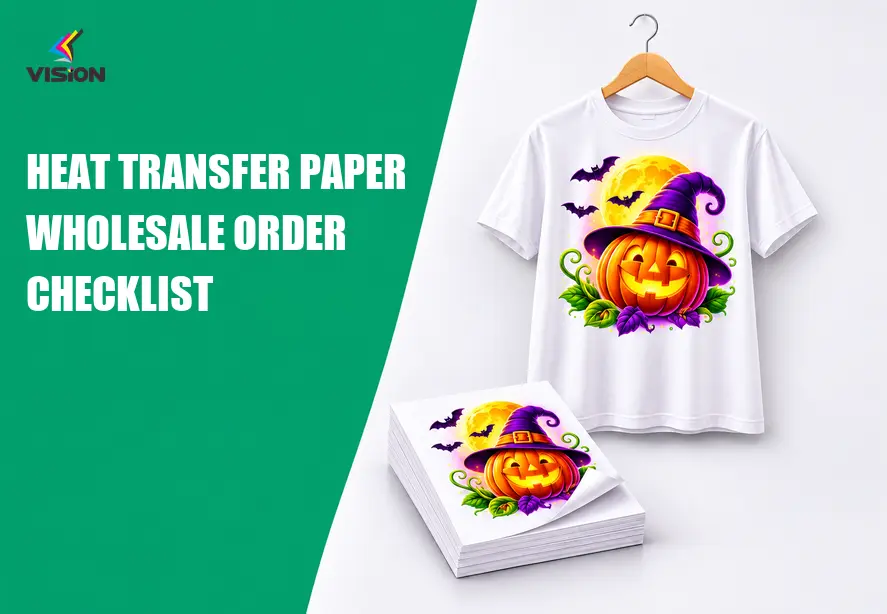
The fastest way to obtain an accurate heat transfer paper quotation is to give the supplier a complete application brief. A wholesale buyer should identify the printer and ink system, garment color and fabric, preferred paper format, test method, packaging needs and expected order structure before comparing prices.
This approach reduces unsuitable samples, incomplete quotations and avoidable changes after testing. It also gives importers and distributors a clearer basis for comparing equivalent products.
1. Define the customer applications you need to cover
Start with the applications that create real demand in your market. Do not begin by ordering the largest possible catalogue.
A distributor’s first range may need to cover:
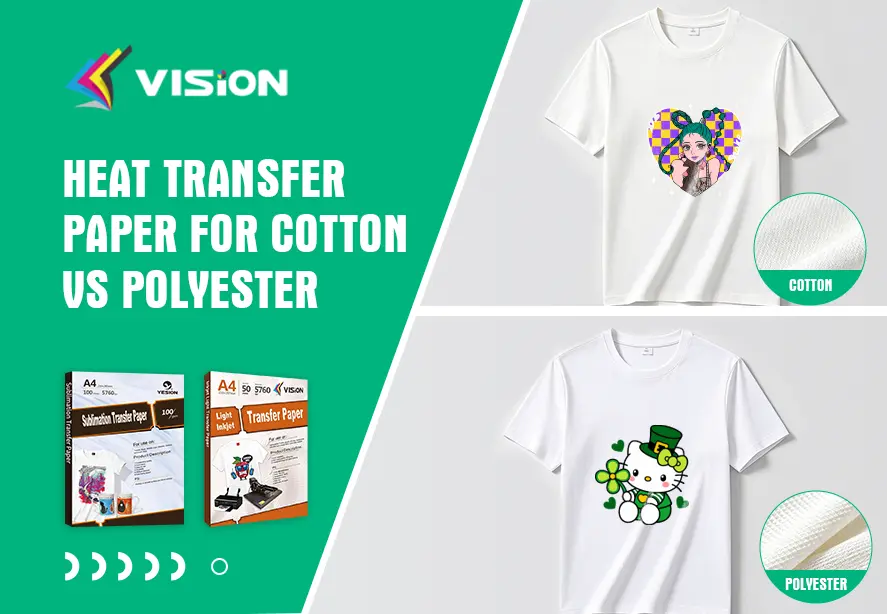
- White and light-colored cotton or compatible cotton-blend garments.
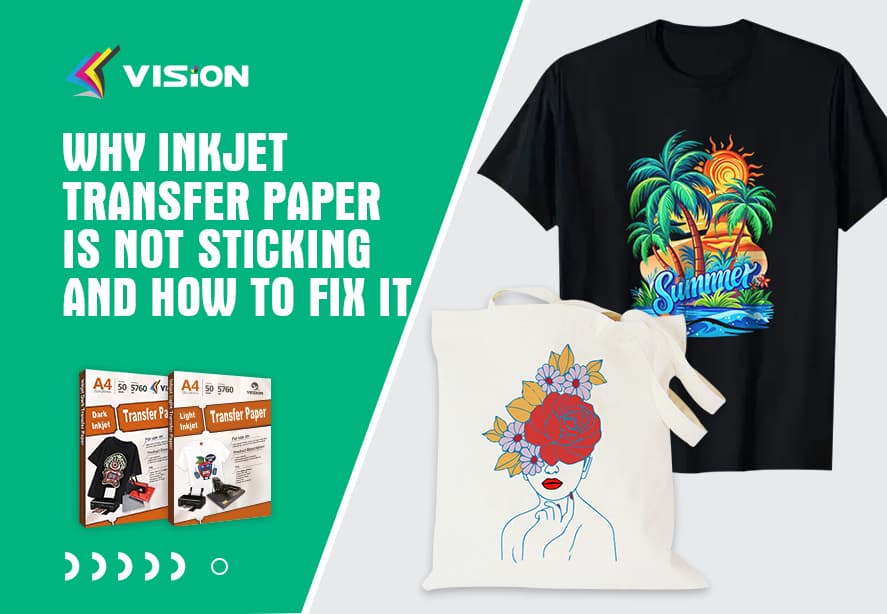
- Black and dark-colored garments that need an opaque transfer layer.
- Customers using inkjet printers.
- Customers using compatible laser printers.
- Printing businesses that need specialty or no-cut solutions.
- Sheet users and higher-volume buyers that may require roll formats.
Review the available heat transfer paper and map each candidate product to a defined customer group. A product should earn its place in the range by solving a specific printer, fabric-color or workflow requirement.
2. Confirm the printing system before requesting samples
Heat transfer papers are not interchangeable across every printer and ink system. Your request should state:
- Printer technology: inkjet, laser or white-toner system.
- Printer model or the relevant printer family.
- Ink or toner type.
- Typical artwork and print coverage.
- Heat press type used for production.
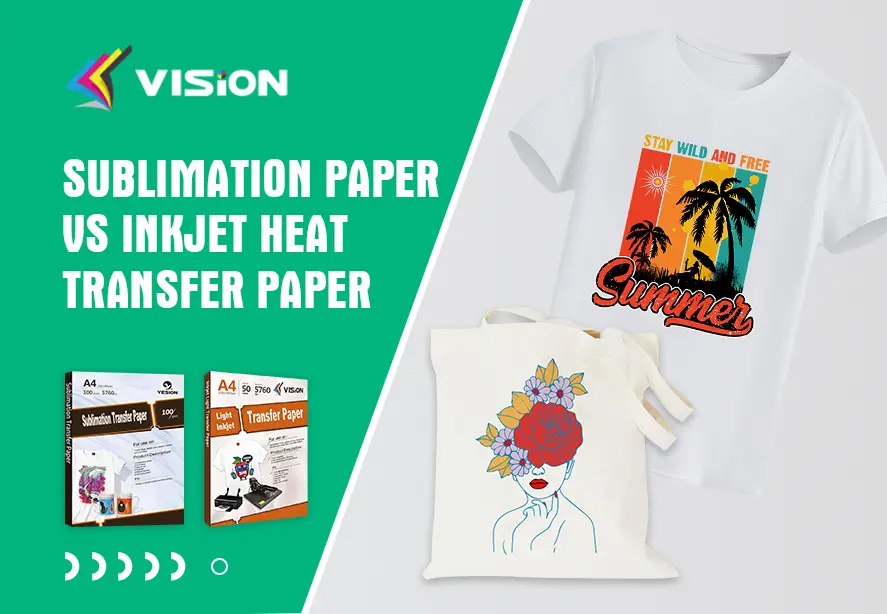
For example, an inkjet heat transfer paper should be evaluated separately from a product such as laser light transfer paper. Ask the supplier to confirm compatibility for the exact product before testing or ordering.
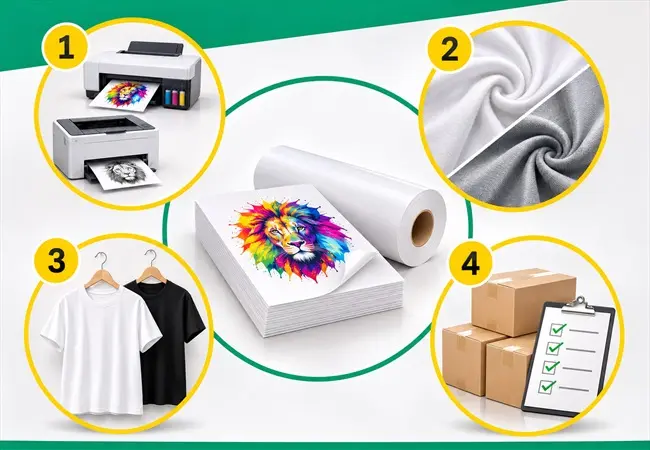
heat transfer paper printing
3. Separate light-garment and dark-garment demand
Garment color changes the transfer-paper requirement. A wholesale brief should estimate how much customer demand comes from light garments and how much comes from dark garments.
| Customer requirement | Product group to investigate | Information to confirm |
|---|---|---|
| White or light cotton garments | Light-fabric transfer paper | Printer, ink, fabric composition and transfer method |
| Black or dark garments | Dark-fabric transfer paper | Opaque layer, cutting needs, printer and fabric compatibility |
| Laser-printing customers | Laser transfer paper | Printer and toner compatibility, garment color and workflow |
| Specialty effects | Specialty transfer paper | Desired effect, application, cutting and production process |
| Higher-volume operations | Sheet or roll options | Available format, packaging and production compatibility |
The goal is not to assume one paper can cover every application. Build a range that reflects the equipment and garments your customers actually use.
4. Specify sheet, roll and packaging requirements
Before asking for a quotation, record the preferred product format and how it will be sold in your market.
- Sheet or roll preference.
- Required size or roll-width range.
- Pack quantity and carton configuration requested for discussion.
- Distributor label, neutral packaging or other OEM/ODM requirements.
- Language needed for labels or instructions.
- Destination market and any packaging constraints.
Available sizes and packaging customization depend on the product. Send an inquiry with the product type and requested order structure so the VISION sales team can confirm what is feasible. OEM/ODM availability, minimum order requirements, timing and cost must also be confirmed for the selected product and quantity.
5. Request the right sample set
Do not ask for an undefined collection of samples. Match each sample to a planned customer application.
A useful sample request states:
- The printer and ink or toner system.
- The light and dark fabrics to be tested.
- The product groups required.
- The test design and print coverage.
- The evaluation criteria.
- The delivery country and contact details.
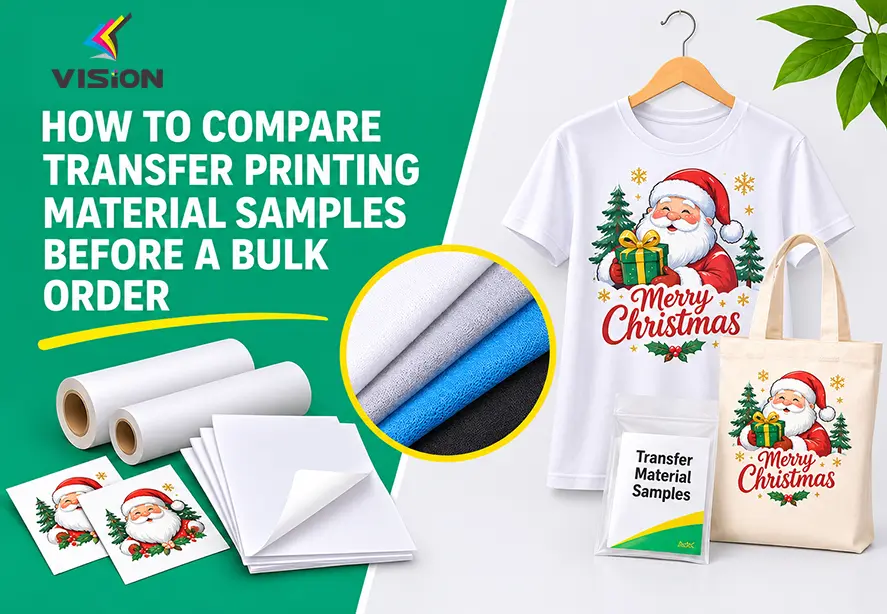
VISION can provide free samples of consumable products, while the customer pays the freight. The sample types, quantity and shipping method are confirmed by the sales team. Before approving a bulk order, follow a controlled process for comparing transfer-printing material samples.
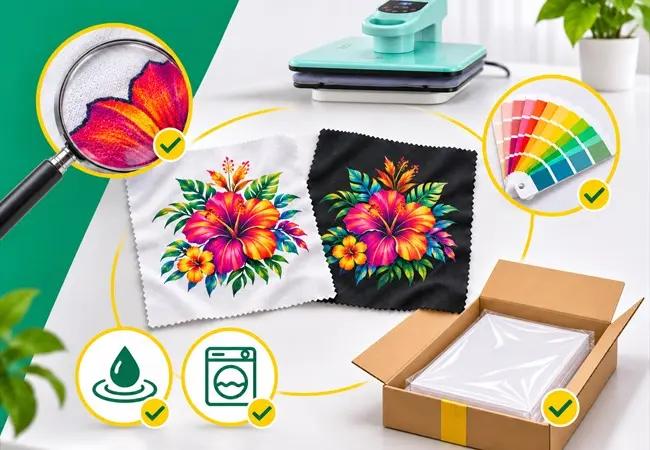
Wholesale buyer comparing heat transfer paper samples
6. Use one test sheet for every candidate
Compare products under equivalent conditions and record the results. Avoid approving a paper after one successful transfer.
| Test area | What to record |
|---|---|
| Printing | Feeding, ink behavior, image detail and visible defects |
| Transfer | Release, adhesion, edges and surface appearance |
| Fabric match | Garment color, fiber composition and feel |
| Repeatability | Results across repeated prints and transfers |
| Washing | The defined wash method and observed changes |
| Handling | Cutting, peeling and production convenience |
| Packaging | Condition on arrival and storage protection |
The supplier’s instructions remain the starting point for each product. Confirm the correct processing conditions instead of applying one temperature, time or pressure setting to every paper.
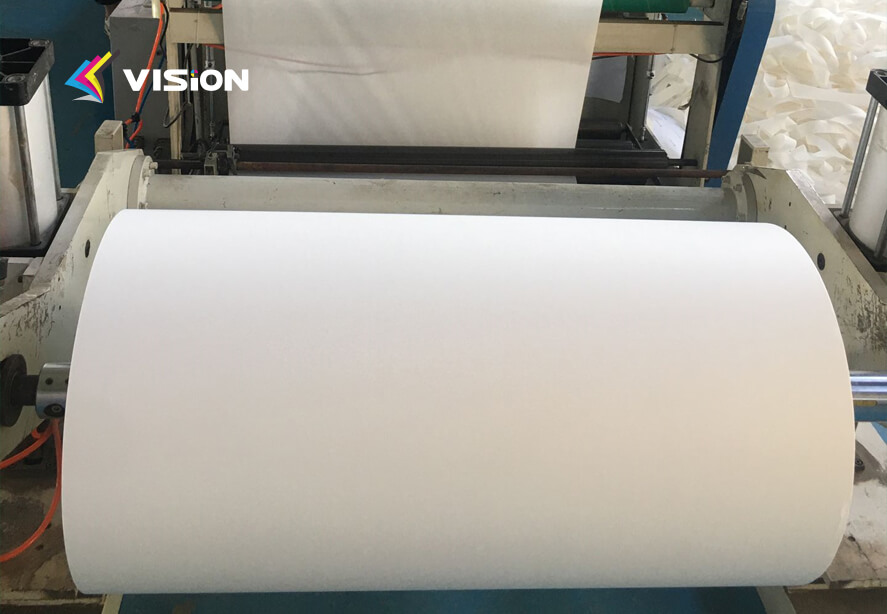
transfer paper factory
7. Prepare a quotation brief that can be compared
Ask each supplier to quote against the same brief. Otherwise, a lower price may represent a different paper, pack configuration or service scope.
Your quotation request should include:
- Product type and intended application.
- Printer, ink or toner, garment color and fabric.
- Required size and format.
- Packaging and labeling request.
- Estimated order quantity for discussion.
- Destination and preferred shipping terms.
- Sample approval status.
- Required documentation or certification request.
VISION can discuss certification according to customer requirements, but the exact certification, applicable product, market, cost and timing must be confirmed before any commitment is made.
8. Evaluate the supplier after defining the product
Once the product brief is clear, evaluate quality consistency, communication, documentation, technical support and repeat-order reliability. The guide How to Evaluate a Heat Transfer Paper Supplier provides a separate supplier-level checklist.
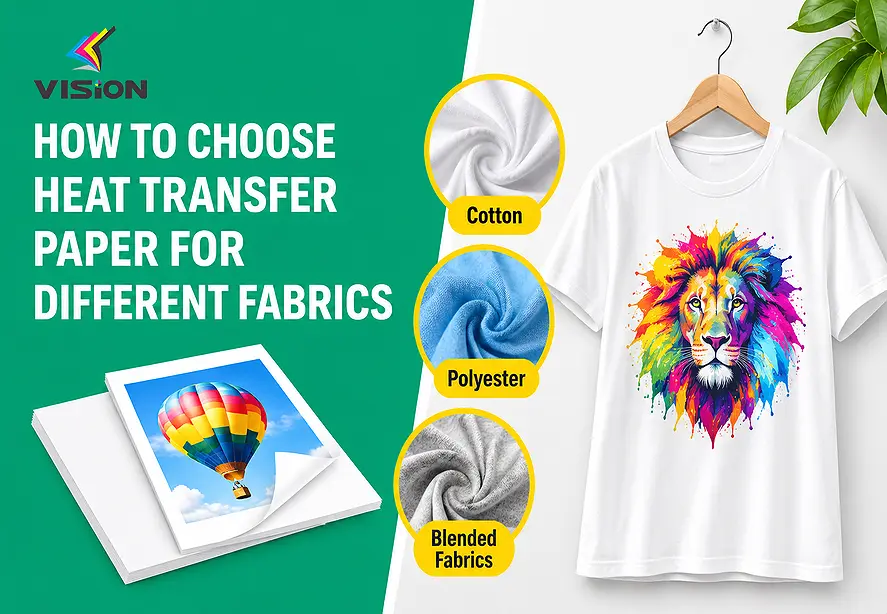
For product selection by textile type, see How to Choose Heat Transfer Paper for Different Fabrics. Keeping these decisions separate prevents a general supplier assessment from replacing product-specific testing.
Wholesale order brief
Copy and complete this list before contacting the sales team:
- Target market and customer type:
- Printer technology and model:
- Ink or toner:
- Garment colors:
- Fabric composition:
- Required paper category:
- Sheet or roll format:
- Requested size:
- Sample products needed:
- Packaging or OEM/ODM request:
- Estimated quantity for discussion:
- Delivery country:
- Documentation or certification request:
Request samples and a wholesale quotation
VISION was established in 2008, and its foreign-trade team is based in Shanghai, China. The team works with importers, wholesalers, distributors and printing businesses on transfer-printing consumables.
Request free samples: Contact VISION with your printer, fabric and product requirements to request free consumables samples. The customer pays freight, and sample details are confirmed by the sales team.
Request a wholesale quotation: Send the completed order brief to discuss product-dependent size, packaging or OEM/ODM options.