

Blog
What Kind of Ink Do You Use for DTF?

Choosing the correct DTF ink is the foundation of achieving vibrant colors, strong adhesion, and long-lasting prints in Direct-to-Film printing. Using the wrong ink will result in poor transfers, fading designs, and costly production errors. In this guide, we break down exactly what kind of ink is used for DTF, how it works, and how to select the best option for your business.
What Is DTF Ink?
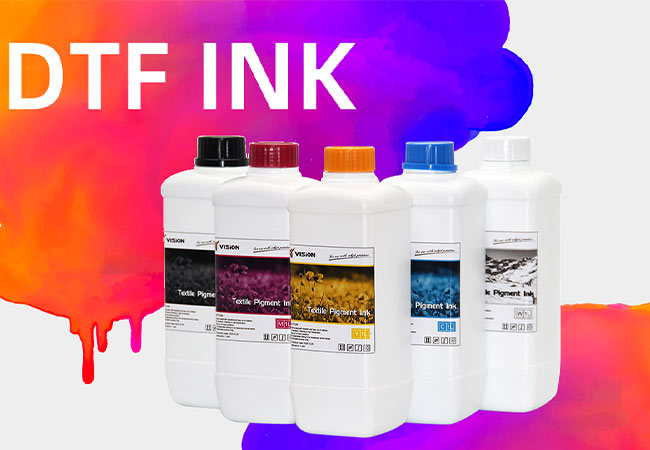
DTF ink is a specialized pigment-based ink designed specifically for printing onto PET transfer film, which is later heat-pressed onto fabric.
Unlike standard inks, DTF ink is engineered to:
- Bond with transfer film and adhesive powder
- Transfer cleanly onto textiles
- Maintain durability after washing
DTF printing relies on this unique formulation to achieve professional-grade textile prints.
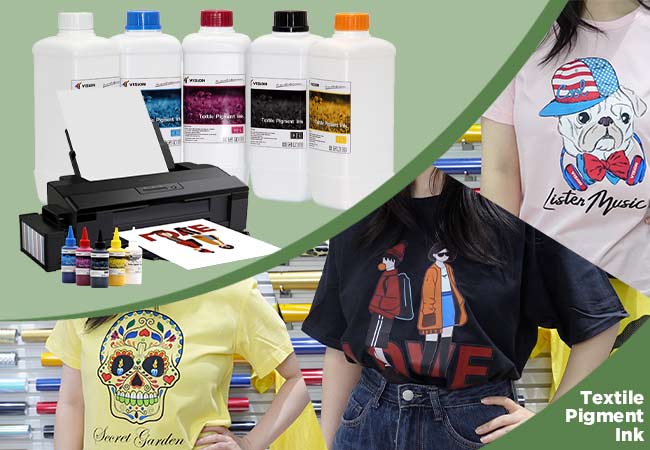
What Type of Ink Is Used in DTF Printing?
1. Water-Based Pigment Ink (Core Standard)
The most widely used ink in DTF printing is water-based pigment ink.
Key Characteristics
- Pigment particles provide strong color stability
- Water-based formula reduces environmental impact
- Excellent adhesion when combined with hot-melt powder
- High wash resistance for long-term durability
This formulation ensures prints remain vivid and intact even after multiple washes.
2. CMYK + White Ink System (Essential Setup)
DTF printing always uses a five-color system:
- Cyan (C)
- Magenta (M)
- Yellow (Y)
- Black (K)
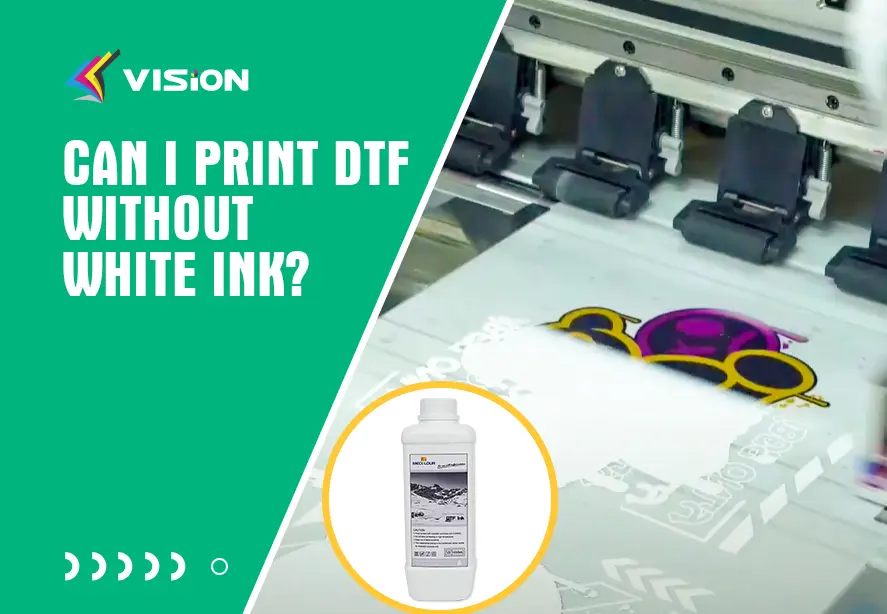
- White (W)
Why White Ink Is Critical
The white ink layer acts as a base, allowing designs to:
- Pop on dark fabrics
- Maintain true color accuracy
- Achieve high opacity
Without white ink, prints would appear faded or transparent on colored garments.
3. Specialty DTF Inks (Advanced Applications)
For advanced production, some manufacturers offer:
- Fluorescent inks for neon effects
- UV DTF inks for hard surfaces
- Low-sediment white ink for reduced clogging
However, for most users, standard pigment CMYK + White ink is sufficient.
What Makes DTF Ink Different from Regular Ink?
DTF Ink vs Inkjet Ink
| Feature | DTF Ink | Regular Inkjet Ink |
|---|---|---|
| Composition | Pigment-based | Dye or pigment |
| Application | Transfer film + heat press | Paper printing |
| Durability | High (wash-resistant) | Low on fabric |
| Adhesion | Bonds with powder & fabric | Weak on textiles |
Direct-to-Film ink is specifically designed for heat transfer processes, while regular inkjet ink is not suitable for fabric transfer and will fail under washing conditions.
Key Components of DTF Ink
High-quality Direct-to-Film ink is carefully formulated with:
1. Pigments
- Provide rich color and UV resistance
- Ensure prints do not fade easily
2. Binders (Resins)
- Enable ink to adhere to film and fabric
3. Water-Based Solvents
- Control flow and drying time
4. Additives
- Improve printhead performance
- Prevent clogging and sedimentation
This balanced composition ensures smooth printing, strong adhesion, and long-term durability.
Why You Must Use Dedicated DTF Ink
Using non-DTF ink leads to serious issues:
- Poor adhesion to film
- Cracking or peeling after transfer
- Washed-out colors
- Printer clogging or damage
Direct-to-Film ink is engineered specifically for:
- PET film compatibility
- Powder bonding
- Heat transfer stability
Substituting regular ink will result in unusable prints and wasted materials.
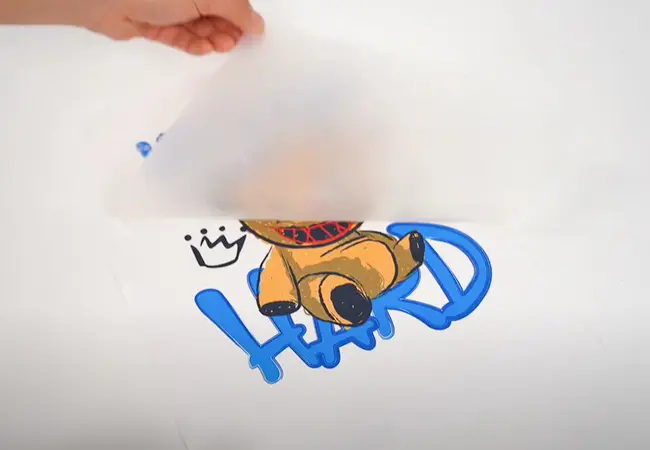
Works in the Printing Process
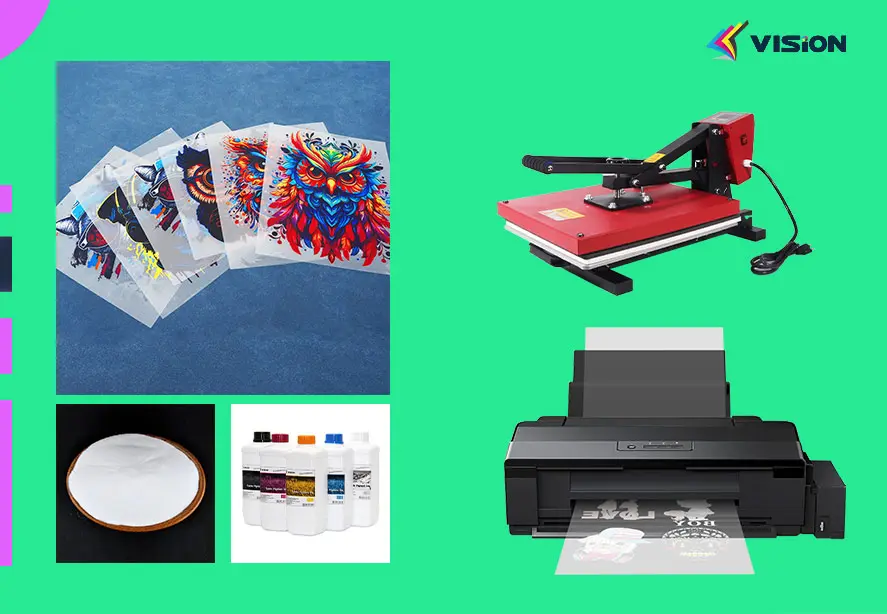
DTF printing follows a precise workflow:
- Print design onto PET film using DTF ink
- Apply hot-melt adhesive powder
- Cure the powder and ink
- Heat press onto fabric
During this process, Direct-to-Film ink:
- Bonds with the adhesive powder
- Transfers seamlessly to fabric
- Forms a flexible, durable print layer
This is what gives DTF prints their soft feel and long-lasting performance.
dtf printing process
Performance Advantages of DTF Ink
1. Exceptional Color Vibrancy
Pigment-based formulation delivers deep, saturated colors.
2. Strong Wash Resistance
DTF prints can withstand dozens of washes without fading.
3. Fabric Versatility
Works on:
- Cotton
- Polyester
- Blends
- Dark and light fabrics
4. Soft and Flexible Finish
Unlike vinyl, Direct-to-Film ink creates a smooth, breathable texture.
Common Mistakes When Choosing DTF Ink
Avoid these critical errors:
Using Cheap Low-Quality Ink
- Causes color inconsistency
- Leads to frequent nozzle clogs
Ignoring White Ink Quality
- Poor white ink results in weak opacity and dull prints
Mixing Different Ink Brands
- Can lead to chemical incompatibility and clogging
Improper Storage
- Ink separation reduces performance and print quality
How to Choose the Best Direct-to-Film ink
When selecting Direct-to-Film ink, prioritize:
- Consistency and low sediment (especially white ink)
- Color accuracy and ICC profile compatibility
- Smooth flow for your printhead (Epson, i3200, etc.)
- Reliable supplier with stable quality
For professional results, always source from trusted manufacturers.
The Right Ink Makes All the Difference
DTF printing success depends heavily on one factor: using the correct DTF ink.
The best choice is always:
- Water-based pigment ink
- CMYK + White system
- Formulated specifically for DTF transfer
With the right ink, you achieve:
- Brighter colors
- Stronger adhesion
- Longer-lasting prints
Investing in high-quality Direct-to-Film ink ensures consistent output, reduced waste, and scalable production success.
Related:
Is DTF ink the same as sublimation ink?
How long does DTF ink last?
Is DTF ink the same as inkjet ink?